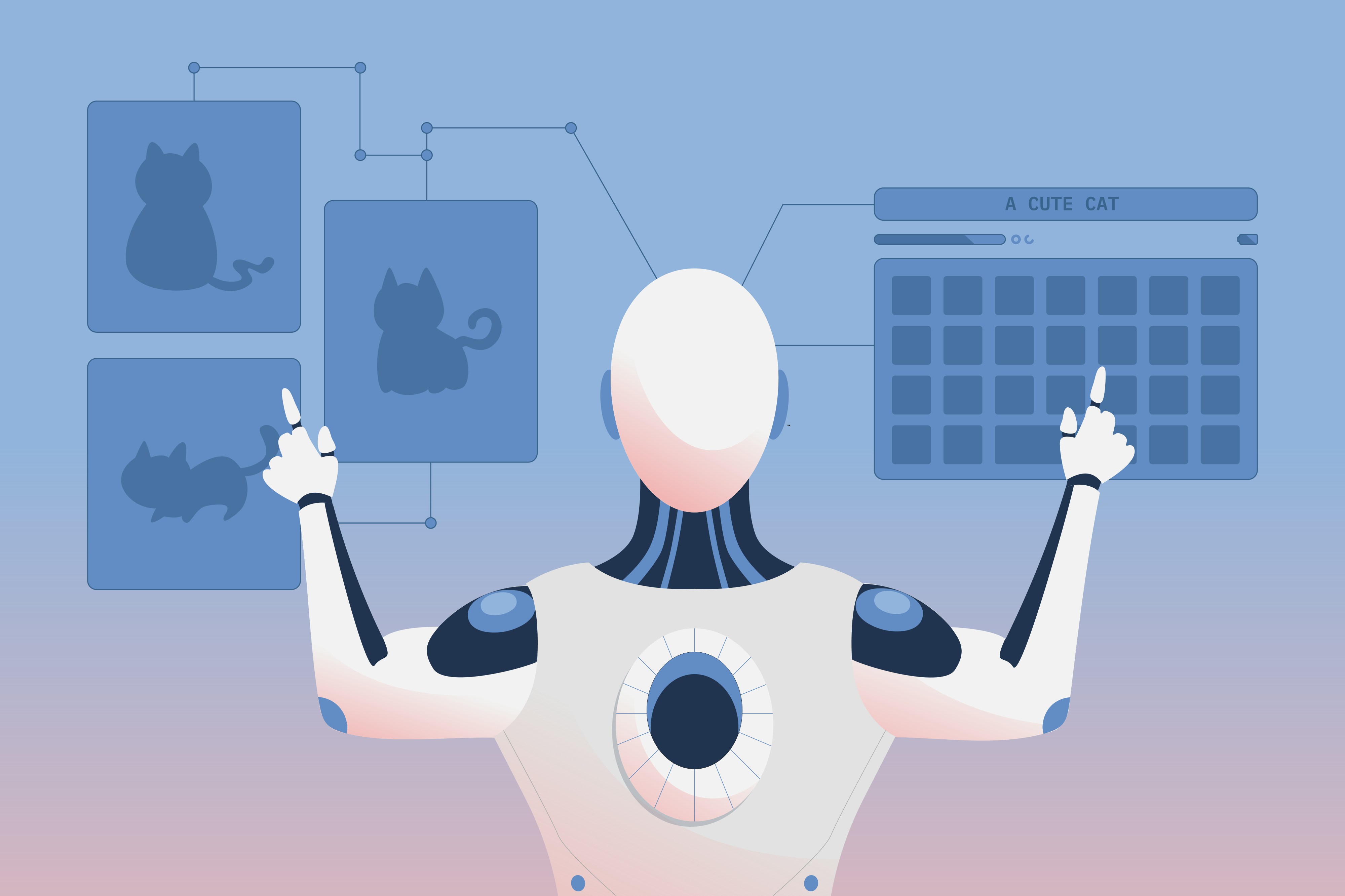
Enterprise data integration used to be a plumbing problem. Get the data from System A into System B on schedule, and your job was done. That framing breaks down once AI workloads enter the picture, because language models, scoring engines, and AI agents don't just need rows. They need governed entities, traceable lineage, and consistent business definitions that hold up across every consuming system.
Choosing the right platform in 2025 means understanding which layer of the stack you're actually buying. Some platforms move data. Some master identities. Some preserve business meaning. Most enterprises need more than one of these, and the vendors in this guide occupy different positions in the stack. The five platforms reviewed here are Informatica, Palantir Foundry, Tamr, Stardog, and Galaxy.
Enterprise Data Integration Platform (working definition): Shared infrastructure that connects, transforms, reconciles, and governs data across multiple enterprise systems for analytics, operations, and AI. Scope extends beyond any single pipeline, connector, or schema mapping tool to include identity resolution, governance, and business-context preservation.
What Is an Enterprise Data Integration Platform?
An enterprise data integration platform handles source connectivity, transformation logic, data quality enforcement, governance controls, and some degree of identity resolution or semantic alignment. The defining characteristic is organizational scope: the platform serves multiple business units and use cases rather than one team's pipeline.
Buyer confusion often stems from treating adjacent categories as interchangeable. They aren't.
Data Integration vs. ETL vs. Reverse ETL vs. Data Mapping vs. iPaaS
ETL (Extract, Transform, Load) is a delivery pattern for moving data from sources into a target warehouse. It is one mechanism inside the broader integration landscape. Many enterprise platforms include ETL alongside orchestration, governance, and modeling.
Reverse ETL pushes modeled data from a warehouse back into operational tools like CRMs and marketing platforms. It solves a real activation need, but it does not address entity reconciliation, lineage, or cross-system governance.
Data Mapping Tools define correspondences between fields and schemas across systems. Mapping is a design step within integration, not a platform category. These tools help plan transformations without orchestrating pipelines or enforcing governance at runtime.
iPaaS (Integration Platform as a Service) provides cloud-hosted connectivity and workflow automation between SaaS applications. iPaaS platforms are strong for prebuilt connectors and event-driven triggers, but most do not handle entity resolution, semantic modeling, or AI-ready context delivery at enterprise scale.
Enterprise data integration platforms sit above individual ETL jobs, reverse ETL flows, mapping tools, and iPaaS connectors. They orchestrate data movement, enforce trust, reconcile identities, and preserve business meaning for downstream consumers including AI systems.
What Changes When the Goal Is AI Readiness
Traditional integration optimizes for reporting: get clean, structured data into a warehouse so analysts can query it. AI workloads raise requirements that most legacy integration architectures were not designed to meet.
Trusted entities, not just rows
A language model or recommendation engine consuming customer data needs to know which records refer to the same person, which attributes are authoritative, and where data originated. Without identity resolution and entity mastering, AI outputs inherit every inconsistency in source systems.
Lineage and provenance as operational requirements
When an AI agent generates a recommendation, stakeholders need to trace the answer back to its source data and business logic. Provenance and lineage are no longer optional compliance artifacts; they are operational requirements for trusting AI outputs.
Shared business definitions across analytics and AI
If "active customer" means one thing in a BI dashboard and something different in an AI scoring model, the organization has an integration failure even if every pipeline ran successfully. The dbt Semantic Layer addresses this for metric definitions and joins, but broader ontology-driven approaches extend consistency to entities, relationships, and hierarchies.
Automated schema mapping
Enterprise migrations require mapping hundreds of schemas across legacy and cloud systems. Platforms that automate schema detection reduce manual bottlenecks. Buyers should distinguish source-side mapping automation from target-side schema evolution, which platforms like Snowflake support natively by automatically adding columns and adjusting constraints.
Real-time CDC
Batch integration that refreshes overnight is insufficient for AI agents reasoning over current data. Databricks Delta change data feed tracks row-level changes between versions and supports ETL pipelines, audit trails, and replication. Buyers should evaluate whether a platform supports CDC natively, relies on partner tooling, or expects the lakehouse to handle it.
How to Evaluate Enterprise Data Integration Platforms
Six criteria separate platforms in this category. Weighting depends on your specific bottleneck.
1. Connectivity and Deployment Fit
Evaluate source and destination coverage, hybrid and multi-cloud support, and deployment flexibility. Large enterprises typically run on-premise systems (SAP, Oracle, SQL Server), SaaS applications (Salesforce, NetSuite, Workday), and cloud platforms (Snowflake, Databricks, BigQuery). Connector count alone tells you little about integration depth or governance maturity.
2. Transformation and Orchestration
Assess workflow design, automation options, and support for complex data flows. Some platforms offer visual orchestration with low-code interfaces; others are code-first. The right fit depends on team composition and transformation complexity.
3. Data Trust and Governance
Look at lineage tracking, data quality controls, stewardship workflows, metadata management, and policy enforcement. Platforms that treat governance as a bolt-on create friction as compliance requirements grow.
4. Identity and Entity Unification
Determine how each platform handles matching, merging, and mastering records across fragmented systems. Many integration failures are actually identity failures: the pipeline moved the data, but nobody reconciled the entities. Google Cloud's Enterprise Knowledge Graph documentation describes entity reconciliation as an AI-powered clustering and deduplication service, which gives a useful baseline for evaluating this capability.
5. Semantic Context and Business Meaning
Evaluate whether a platform preserves entities, metrics, relationships, and reusable business definitions across consumers. A metric-centric semantic layer (like dbt's) centralizes metric definitions and joins. An ontology-driven context system goes further, modeling entities, relationships, and hierarchies so business meaning travels with the data. Platforms with a semantic data unification architecture occupy the broader end of this spectrum.
6. Time-to-Value and Operating Complexity
A platform requiring six months of professional services is a fundamentally different commitment than one layering onto existing infrastructure incrementally. Consider specialist skill requirements, implementation burden, and long-term operating overhead.
Comparison Table: Enterprise Data Integration Platforms by Capability
Capability | Informatica | Palantir Foundry | Tamr | Stardog | Galaxy |
|---|---|---|---|---|---|
SaaS/Cloud Connectors | Hundreds (no-code) | Moderate | Limited | Limited | Layered on existing pipelines |
ERP/CRM Integration | Deep (SAP, Oracle, Salesforce) | Ontology-driven | Entity-focused | Schema virtualization | Semantic unification |
Schema Mapping | AI-assisted detection | Ontology layer | Partial (entity-focused) | RDF/OWL modeling | Ontology-driven |
CDC Support | Native | Pipeline-based | Not primary focus | Not primary focus | Relies on upstream CDC tools |
Entity Resolution | Via MDM module | Ontology-based | Core strength (AI-native) | Graph-based | Core capability (semantic) |
Lineage & Governance | Comprehensive suite | Integrated with ontology | Limited | Standards-based | Semantic provenance |
Semantic Layer / Knowledge Graph | Limited | Ontology layer | Not primary | Core strength (graph-native) | Core strength (ontology-driven context) |
Low-Code Pipeline Design | Visual orchestration | Code + visual | ML-assisted curation | SPARQL-based | Configuration-driven |
Best For | Broad enterprise data management | Complex operational + semantic | Entity mastering at scale | Graph reasoning + explainability | Shared semantic context for analytics & AI |
Best Platforms for SaaS and Cloud Connector Breadth
When stitching together Salesforce, NetSuite, HubSpot, and Workday, the priority is usually fast deployment through prebuilt connectors.
Informatica leads here with hundreds of no-code connectors spanning cloud and on-premise sources. Its Cloud Data Integration platform provides mature tooling for organizations managing diverse SaaS and enterprise data sources with adjacent governance and quality controls.
iPaaS and ELT tools (Fivetran, Airbyte, MuleSoft) specialize in prebuilt SaaS connectors and event-driven integration. These are strong when data movement speed and connector coverage are the dominant requirement, but most do not address entity resolution or semantic modeling.
Galaxy takes a different approach. Rather than competing on connector count, Galaxy layers ontology management and semantic modeling on top of existing connectors and pipelines. Teams can use their preferred ELT tool for extraction while Galaxy provides the semantic alignment that makes integrated SaaS data consistent for AI consumers.
Best Platforms for ERP + CRM Unification and Post-Merger Integration
ERP and CRM integration is where many platforms break down, because transactional systems expose different structures, update patterns, and business definitions for the same customer or product. Post-merger integration compounds the problem by doubling source systems with conflicting entity definitions.
Informatica provides broad ERP coverage with deep SAP, Oracle, and Microsoft Dynamics connectors plus adjacent MDM capabilities. When the bottleneck is scale of data movement across dozens of enterprise systems, Informatica is a natural starting point.
Tamr excels at the entity resolution layer. Its AI-native entity resolution automates matching across large, fragmented datasets, producing trusted golden records for customers, products, and suppliers. Tamr is the right choice when identity fragmentation drives integration failures.
Galaxy addresses the semantic layer that sits on top of resolved entities. After entities are matched, Galaxy ensures the unified customer, product, or supplier carries consistent business meaning across every consuming system. For post-merger scenarios where "revenue" and "active customer" have different definitions in each acquired company, Galaxy's enterprise context strategy reference architecture resolves the semantic conflict without requiring warehouse replacement.
Best Platforms for Entity Resolution, Golden Records, and Customer 360
Entity resolution determines which records across fragmented systems refer to the same real-world entity. For enterprises with data spread across CRM, ERP, billing, and support systems, entity resolution is often the single highest-value integration capability.
Tamr is the strongest pure mastering platform in this comparison. Tamr's FAQ describes the platform as an AI-native MDM platform that unifies and curates data from disparate systems using AI. It handles customer, supplier, product, location, and multi-domain mastering, with pricing tied to data type and record volume.
Galaxy extends beyond mastering into semantic alignment. After entities are resolved, Galaxy ensures each entity carries consistent business meaning and relationships across dashboards, data products, and AI agents. Galaxy's identity resolution and entity mastering capabilities create semantically rich entity models, not just deduplicated records.
Informatica addresses entity resolution through its MDM module with matching, merging, and stewardship workflows inside a broader data management ecosystem.
Palantir Foundry handles entity unification through its ontology layer, mapping business objects from different source systems to unified semantic objects. Foundry's approach is powerful but requires commitment to the full platform.
Best Platforms for Snowflake and Lakehouse Migration with Automated Schema Mapping
Snowflake migration projects succeed fastest when integration tooling can replicate legacy data with minimal downtime while preserving relationships and downstream analytics trust. Critical requirements are automated schema mapping, CDC for incremental synchronization, and governance continuity.
Buyers should separate source-side mapping automation from target-side schema evolution. Snowflake supports automatic table schema evolution, adding columns and adjusting constraints as source data changes. That reduces downstream friction, but source-side mapping still needs tooling.
Informatica offers the most comprehensive migration toolkit with native CDC support, automated schema detection, and deep Snowflake integration. For high-volume incremental replication from mainframes, Oracle, and SQL Server into cloud targets, Informatica's CDC capabilities are mature and well-documented.
Galaxy adds value to Snowflake migrations by preserving semantic context through the transition. When legacy systems carry implicit business logic in stored procedures, views, and tribal knowledge, Galaxy captures and formalizes that meaning so it survives migration into cloud-native infrastructure via its semantic data unification architecture.
Best Platforms for Low-Code ELT and Change Data Capture Pipelines
For teams designing and managing ELT pipelines without heavy engineering overhead, low-code interfaces and managed CDC are the priority.
Informatica provides visual pipeline orchestration through Cloud Data Integration with drag-and-drop transformation design and managed CDC for popular enterprise sources. Palantir Foundry offers both code and visual interfaces, with pipelines connecting directly to its ontology layer so transformations carry semantic awareness.
Galaxy is not a general-purpose ELT platform. Teams still need pipeline infrastructure for raw data movement. Galaxy's role in this scenario is as the semantic intelligence layer above ELT pipelines, ensuring business meaning and entity relationships are preserved and governed for AI consumers.
Best Platforms for Metadata Lineage and Data Governance
For enterprises where compliance, auditability, and data trust are primary drivers, lineage and governance must be native to the platform rather than added after deployment.
Informatica offers the broadest governance ecosystem among these platforms, with integrated data catalog, lineage visualization, stewardship workflows, quality scoring, and policy enforcement under one vendor umbrella.
Palantir Foundry integrates governance directly into its ontology layer, with access controls, lineage tracking, and audit trails spanning data connectivity through operational applications. Lineage in Foundry extends beyond pipeline metadata to semantic relationships.
Galaxy tracks provenance and lineage through its semantic layer, tracing how entities, metrics, and business definitions flow from source systems through to AI consumers. Galaxy's lineage traces business meaning, not just pipeline execution metadata.
Stardog approaches governance through standards-based semantic modeling (RDF, OWL, SPARQL). Its graph-native architecture provides inherent lineage through the knowledge graph structure, supporting compliance use cases like supply-chain traceability.
Best Platforms for Semantic Layer and Knowledge Graph Capabilities for AI
This is the fastest-moving segment of the enterprise data integration landscape. AI systems, including LLMs, RAG pipelines, and AI agents, need governed entities, traceable metrics, and shared semantic context.
The category boundary matters here. A metric-centric semantic layer (like dbt's) centralizes metric definitions and joins for downstream tools. An ontology-driven context system models entities, relationships, and hierarchies for broader reuse. A knowledge graph platform provides graph-native reasoning, inference, and connected-data querying.
Stardog is the strongest pure knowledge graph platform in this set. Its inference engine supports explainable AI, and its virtualization capabilities let teams query data in place without centralizing it. Enterprise licensing is contact-sales, with a free tier for exploration.
Palantir Foundry provides ontology-driven integration where semantic models are first-class citizens linked to operational workflows and decision logic. Foundry is strongest when integration, semantic modeling, and AI application development need to coexist in one platform.
Galaxy occupies the ontology-driven context layer between metric-centric semantic layers and full knowledge graph platforms. Galaxy's ontology management and semantic modeling lets teams define entities, metrics, hierarchies, and relationships once, then reuse those definitions across every analytical and AI workload. Galaxy's end-to-end enterprise context data flow is designed so AI agents and language models consume governed context rather than raw tables. Where dbt centralizes metric logic, Galaxy extends consistency to entities, relationships, and business hierarchies across a broader range of consumers.
Platform Reviews
Informatica
Best for: Large enterprises needing a single vendor spanning integration, governance, data quality, and MDM.
Informatica positions Cloud Data Integration inside a broader data management platform that includes data catalog, API integration, MDM and 360 applications, governance, and data quality and observability.
Pros:
Hundreds of no-code connectors span cloud and on-premise sources, providing the broadest connectivity in this comparison.
Adjacent governance ecosystem includes lineage, stewardship, policy controls, and quality scoring natively.
Native CDC support handles high-volume incremental replication from legacy systems.
Mature documentation and a large partner ecosystem reduce implementation risk.
Cons:
Platform complexity scales quickly as teams adopt multiple modules, requiring dedicated administrators.
Semantic modeling is not the center of gravity; organizations needing ontology-driven context may need an additional layer.
Palantir Foundry
Best for: Large enterprises with complex operational requirements where data, logic, and action need to coexist in one platform.
Palantir Foundry combines data integration with an ontology that functions as an operational layer for the organization, sitting on top of digital assets integrated into the platform. The ontology includes object types, link types, actions, permissions, and monitoring.
Pros:
Ontology is first-class infrastructure, natively integrated with data pipelines, workflows, and application logic.
Operational workflow support lets teams build applications and decision logic directly on integrated data.
Governance controls span data connectivity, observability, analytics, and security in one environment.
Cons:
Implementation burden is high, often requiring dedicated teams and significant professional services.
Full-platform commitment can be a barrier for organizations that need targeted integration or lighter semantic tooling.
Tamr
Best for: Enterprises where fragmented customer, supplier, or product identities are the primary integration bottleneck.
Tamr is an AI-native MDM platform that helps organizations unify and curate data from disparate systems using AI. It supports Customer 360, supplier mastering, product mastering, and multi-domain use cases.
Pros:
AI-native entity resolution automates matching and curation across large, fragmented datasets.
Multi-domain mastering covers customers, suppliers, products, locations, and contacts.
SaaS packaging scales based on data type and record volume, avoiding opaque enterprise licensing.
Cons:
Narrower than a full integration suite; organizations typically pair Tamr with other tools for pipeline orchestration and semantic context delivery.
Strongest upstream, meaning value concentrates on trust and mastering rather than downstream context serving for AI consumers.
Stardog
Best for: Teams that need graph-based reasoning, explainability, and semantic virtualization across distributed enterprise data.
Stardog is an enterprise knowledge graph platform available on-premises or in the cloud. Its capabilities center on graph reasoning, inference, data virtualization, and standards-based modeling (RDF, OWL, SPARQL).
Pros:
Graph-native inference engine supports explainable AI and reasoning that relational platforms cannot easily replicate.
Semantic virtualization lets teams query data in place across distributed sources without centralizing it.
Standards-based modeling (RDF, OWL) provides portability and interoperability with other semantic tooling.
Cons:
Requires graph expertise that many enterprise data teams do not have in-house, increasing implementation and operating cost.
Pipeline and orchestration scope is narrower than broad integration suites; Stardog is a graph platform, not a connector platform.
Galaxy
Best for: Enterprise teams needing shared semantic context, consistent business definitions, and reusable entity and metric models across analytics and AI systems.
Galaxy is ontology-driven semantic infrastructure designed to preserve business meaning across the systems that consume enterprise data. Rather than replacing existing pipelines or warehouses, Galaxy layers shared context on top of them, making entities, metrics, and relationships available to BI tools, semantic queries, and AI agents through a unified enterprise context strategy reference architecture.
Galaxy's ontology management and semantic modeling lets teams define entities, metrics, hierarchies, and relationships once, then reuse those governed definitions across every analytical and AI workload. Where a metric-centric semantic layer handles metric definitions and joins, Galaxy extends consistency to entities, relationships, and business hierarchies across a broader set of consumers.
Pros:
Semantic consistency across consumers means a metric or entity defined in Galaxy carries the same meaning in a dashboard, a data product, and an AI agent workflow.
Preserves existing infrastructure by layering onto current data stores and pipelines rather than requiring wholesale replacement.
Entity and metric reuse reduces duplication of business logic across teams, which is especially valuable in post-merger or multi-domain environments.
AI-ready context delivery supports the end-to-end enterprise context data flow that language models and AI agents need for trustworthy outputs.
Lighter implementation footprint compared to full operational platforms; Galaxy layers incrementally onto existing architecture.
Identity resolution and semantic alignment are built into the platform, connecting mastering to downstream context delivery.
Cons:
Not a general-purpose ETL platform; teams still need pipeline infrastructure for raw data movement.
Connector breadth is narrower than broad integration suites; Galaxy's value is in the context layer above movement.
Which Type of Platform Fits Which Enterprise Need?
Choose a Broad Integration Suite When
Scale of data movement, connector coverage, and governance breadth are the primary constraints. Organizations managing hundreds of sources across hybrid environments with strong compliance requirements benefit from platforms like Informatica.
Choose an MDM or Entity Resolution Platform When
Fragmented business identities are the main source of downstream failure. If customer, supplier, or product records are duplicated and inconsistent across systems, a mastering platform like Tamr resolves the root cause before semantic or analytical layers can add value.
Choose a Semantic or Ontology-Driven Platform When
Business meaning must stay consistent across analytics and AI workloads. If teams spend most of their time reconciling definitions rather than moving data, platforms like Galaxy address the context layer directly. Galaxy is particularly strong when the goal is reusable entity and metric definitions that serve both BI and AI consumers without drift.
Choose a Knowledge Graph Platform When
Graph-based reasoning, explainability, and connected-data modeling are central requirements. Use cases like compliance reasoning, supply-chain traceability, and Graph RAG benefit from Stardog's graph-native architecture and inference engine.
Choose a Combined Architecture When
Many large enterprises need data movement, entity trust, and semantic consistency together. A pipeline platform for movement, a mastering tool for identity, and a semantic context layer for business meaning is a common three-layer architecture, because no single vendor covers all three with equal depth.
Common Mistakes Buyers Make
Collapsing categories. Treating ETL tools, reverse ETL products, iPaaS platforms, and enterprise integration platforms as interchangeable leads to mismatched evaluations. Each category solves a different problem at a different layer.
Over-indexing on connectors. Connector count is easy to compare but tells you little about governance, identity, or semantic capabilities. A platform with broad connectors and no semantic layer still produces fragmented context downstream.
Deferring identity and governance. Teams often treat entity resolution and governance as phase-two concerns. By then, downstream systems have been built on fragmented data, and retrofitting trust costs significantly more than building it in from the start.
Treating AI readiness as a feature toggle. No single checkbox makes a platform AI-ready. AI readiness is a property of the integrated data: trustworthy entities, traceable lineage, and consistent business definitions.
Choosing based on pipeline features alone. For organizations whose integration failures stem from lost business meaning rather than lost data, a faster pipeline doesn't solve the problem. Semantic context, entity resolution, and governance are what make integrated data trustworthy for AI.
FAQ
What is the best enterprise data integration platform for SaaS connectors?
Informatica offers the broadest connector coverage with hundreds of no-code connectors. iPaaS and ELT tools like Fivetran and MuleSoft also specialize in SaaS connectivity. When SaaS data needs to arrive with consistent semantic context for AI workloads, pairing a connector tool with Galaxy's semantic layer preserves business meaning across integrated sources.
Which platforms handle entity resolution and golden records best?
Tamr provides AI-native entity resolution for creating trusted golden records across fragmented datasets. Galaxy combines entity resolution with semantic alignment, ensuring resolved entities carry consistent business meaning across downstream consumers. Informatica addresses entity resolution through its MDM module.
What is the difference between a semantic layer and a knowledge graph?
A metric-centric semantic layer (like dbt's) centralizes metric definitions and joins for downstream tools. A knowledge graph organizes and reconciles siloed information into connected entities and relationships, supporting inference and reasoning. Galaxy occupies the ontology-driven context layer between metric-centric semantics and full graph platforms; Stardog is a pure knowledge graph platform with graph-native inference.
Which platform is best for post-merger data integration?
Post-merger integration requires reconciling conflicting entity definitions and business logic across two companies. Informatica provides broad connector coverage. Tamr resolves conflicting identities. Galaxy addresses the semantic layer, ensuring terms like "revenue" and "active customer" carry consistent definitions across the combined organization.
How does CDC differ from batch ELT for AI-ready integration?
Batch ELT extracts data on a schedule, creating latency between source changes and warehouse availability. CDC captures incremental changes in near-real-time. Databricks Delta change data feed, for example, tracks row-level changes and supports ETL, audit trails, and replication. CDC is increasingly expected for AI applications reasoning over current data.
Can I use Galaxy with my existing warehouse and pipeline tools?
Yes. Galaxy is designed to layer onto existing data stores and pipelines rather than replace them. Teams keep their preferred ELT tooling and warehouses (Snowflake, Databricks, BigQuery) while Galaxy provides the semantic context layer above.
Which platform is best for metadata lineage and governance?
Informatica provides the most comprehensive governance suite with catalog, lineage, stewardship, and policy controls. Galaxy tracks semantic provenance, tracing business meaning from governed definitions through to AI consumers. Palantir Foundry integrates governance into its ontology layer. Stardog offers standards-based lineage through its knowledge graph structure.
Conclusion
AI-ready enterprise data integration breaks into three distinct problems: moving data reliably, establishing trust through identity resolution and governance, and preserving business meaning so downstream consumers can reason consistently. No single vendor solves all three with equal depth, which is why understanding the architectural layer each platform occupies matters more than comparing feature checklists.
For organizations where the primary gap is business-context preservation across analytics and AI, a semantic infrastructure layer like Galaxy addresses that problem directly. For organizations where the gap is scale of movement or identity fragmentation, broad integration suites and mastering platforms may be the right starting point. The strongest architectures typically combine approaches, matching each layer to the specific bottleneck it was designed to solve.
Interested in learning more about Galaxy?


" height="24px" id="PKt6RW0lu" width="24px"/></g></svg>)
" height="23.247157673850985px" id="M3DBdZhx2" width="24px"/></g></g></svg>)
" height="24.5274px" id="bTanG43xy" width="24px"/></g></svg>)